A
AML (Anti-Money Laundering)
Regulations and procedures designed to prevent criminals from disguising illegally obtained funds as legitimate income. Critical for compliant tokenization platforms.
AUM (Assets Under Management)
The total market value of investments managed by a fund or financial institution. Key metric for evaluating tokenization platform scale.
B
Blockchain
A distributed, immutable digital ledger that records transactions across multiple computers. The foundational technology enabling asset tokenization.
Bridge
A protocol that enables the transfer of tokens and data between different blockchain networks, allowing cross-chain interoperability.
Burning
The permanent removal of tokens from circulation, typically by sending them to an inaccessible wallet address. Used to reduce supply or redeem underlying assets.
C
Compliance
Adherence to regulatory requirements and legal standards. Essential for tokenized securities operating within established financial frameworks.
Custodian
A financial institution that holds and safeguards assets on behalf of clients. In tokenization, custodians secure the underlying real-world assets.
D
DAO (Decentralized Autonomous Organization)
An organization represented by rules encoded as smart contracts, controlled by members rather than a central authority. Enables collective governance of tokenized assets.
DeFi (Decentralized Finance)
Financial services built on blockchain networks that operate without traditional intermediaries like banks. Tokenized RWAs can be used as collateral in DeFi protocols.
DLT (Distributed Ledger Technology)
A digital system for recording, sharing, and synchronizing data across multiple sites without a central administrator. Blockchain is the most common form of DLT.
E
ERC-20
A technical standard for fungible tokens on the Ethereum blockchain. Most tokenized RWAs use ERC-20 for divisible, interchangeable tokens.
ERC-721
A standard for non-fungible tokens (NFTs) on Ethereum, used for unique assets like individual properties or art pieces that cannot be subdivided.
ERC-1155
A multi-token standard supporting both fungible and non-fungible tokens in a single contract. Useful for complex tokenization structures.
F
Fractional Ownership
Dividing an asset into smaller portions that can be owned by multiple investors. Tokenization enables fractional ownership of previously illiquid assets like real estate.
G
Gas Fees
Transaction fees paid to blockchain validators for processing and confirming transactions. A cost consideration for tokenized asset transfers.
Governance Token
A token that grants holders voting rights in protocol decisions. Used to decentralize control of tokenization platforms and asset management.
H
Hot Wallet
A cryptocurrency wallet connected to the internet for quick transactions. Less secure than cold storage but more convenient for trading.
I
Interoperability
The ability of different blockchain networks and systems to communicate and share data. Critical for tokenized assets to move across platforms.
K
KYC (Know Your Customer)
Identity verification processes required by financial regulations. All compliant tokenization platforms implement KYC for investor onboarding.
L
Layer 2
Scaling solutions built on top of existing blockchains to increase transaction speed and reduce costs. Important for efficient tokenized asset trading.
Liquidity
The ease with which an asset can be bought or sold without significantly affecting its price. Tokenization aims to increase liquidity of traditionally illiquid assets.
Liquidity Pool
Smart contract-locked token reserves enabling decentralized trading. Tokenized RWAs can be added to liquidity pools for DeFi integration.
M
MiCA (Markets in Crypto-Assets)
European Union regulation providing a comprehensive framework for crypto-assets, including tokenized securities. The global standard for RWA compliance.
Minting
The process of creating new tokens on a blockchain. In tokenization, minting creates digital representations of real-world assets.
N
NAV (Net Asset Value)
The total value of a fund's assets minus liabilities. Tokenized funds calculate NAV to determine token price relative to underlying assets.
NFT (Non-Fungible Token)
A unique digital token representing ownership of a specific item. Used for tokenizing unique assets like individual artworks or properties.
O
Off-Chain
Transactions or data stored outside the main blockchain. Some tokenization systems use off-chain components for efficiency or privacy.
On-Chain
Transactions recorded directly on the blockchain, providing immutability and transparency. Essential for verifiable tokenized asset ownership.
Oracle
A service providing external data to blockchain smart contracts. Tokenization platforms use oracles for asset valuations and real-world data feeds.
P
Private Placement
Sale of securities to a select group of investors rather than the public. Many tokenized securities are initially offered through private placements.
R
RWA (Real World Assets)
Physical or traditional financial assets tokenized on blockchain, including real estate, commodities, bonds, and private credit. The core concept of asset tokenization.
S
Secondary Market
A marketplace where investors trade previously issued securities. Tokenization enables 24/7 secondary trading of traditionally illiquid assets.
SEC (Securities and Exchange Commission)
U.S. regulatory agency overseeing securities markets. Tokenized securities in the U.S. must comply with SEC regulations.
Security Token
A digital token representing ownership of a regulated security like equity, debt, or real estate. Subject to securities laws and regulations.
Self-Custody
Holding and controlling one's own private keys and assets without relying on third-party custodians. Enables true ownership of tokenized assets.
Smart Contract
Self-executing code on a blockchain that automatically enforces agreement terms. The technology enabling programmable tokenized assets and automated compliance.
SPV (Special Purpose Vehicle)
A legal entity created to isolate financial risk and hold specific assets. Commonly used in tokenization to hold underlying real-world assets.
Stablecoin
A cryptocurrency designed to maintain a stable value, typically pegged to fiat currency. Used for settlements in tokenized asset transactions.
STO (Security Token Offering)
A regulated fundraising method where security tokens are sold to investors. The compliant alternative to ICOs for tokenized securities.
T
Tokenization
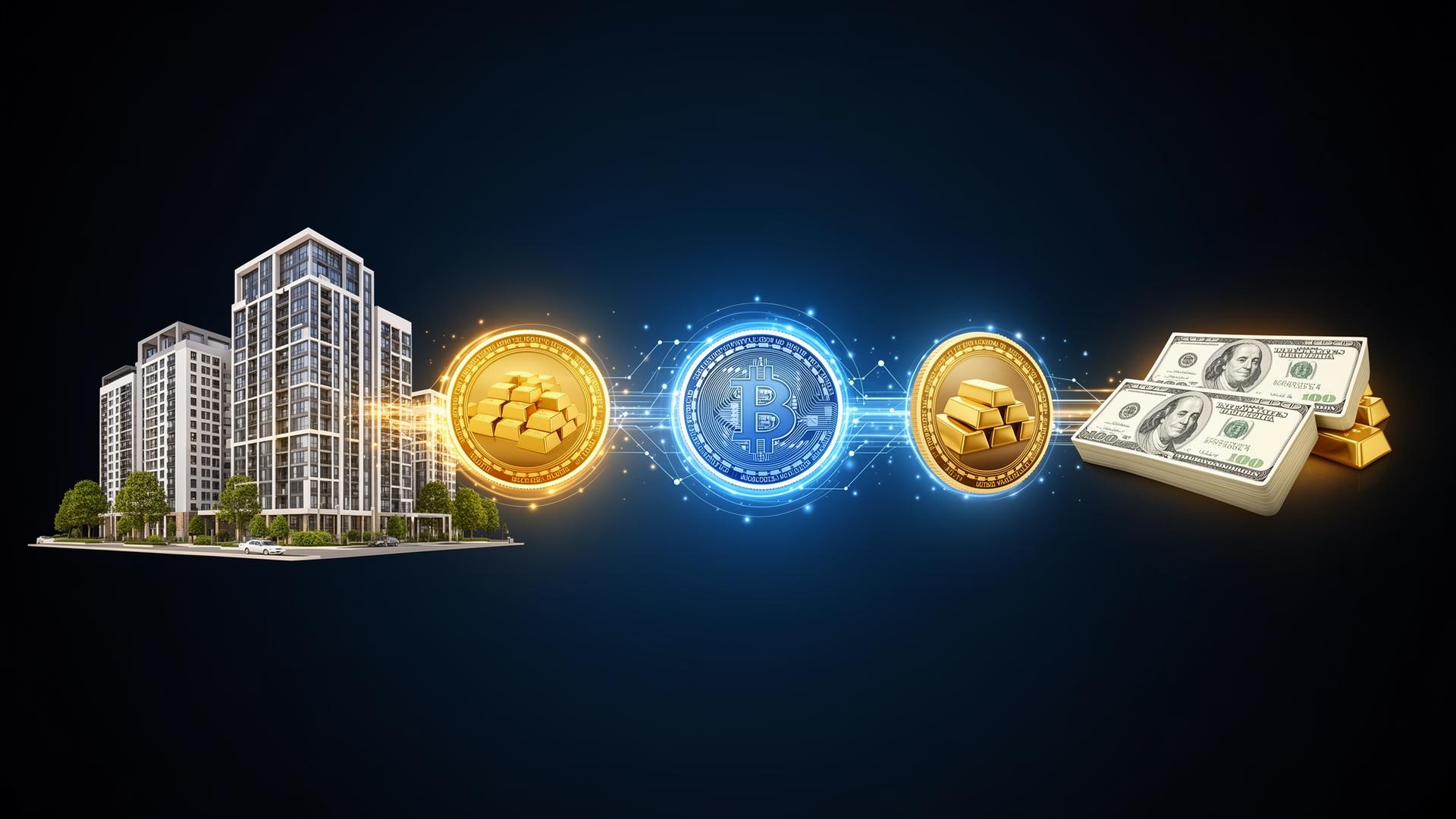
The process of converting rights to an asset into a digital token on a blockchain. Enables fractional ownership, increased liquidity, and 24/7 trading.
Transfer Agent
An entity responsible for maintaining records of security ownership. In tokenization, this role may be automated by smart contracts.
TVL (Total Value Locked)
The total value of assets deposited in a DeFi protocol or tokenization platform. Key metric for measuring adoption and trust.
W
Wallet
Software or hardware that stores private keys and enables interaction with blockchain networks. Required to hold and transfer tokenized assets.
Whitelist
A pre-approved list of wallet addresses allowed to participate in a token sale or hold a security token. Essential for regulatory compliance.
Y
Yield
Income generated from an investment, expressed as a percentage. Tokenized RWAs like bonds and real estate generate yield for token holders.
Yield Farming
Strategy of moving crypto assets between DeFi protocols to maximize returns. Tokenized RWAs can participate in yield farming for additional income.
Ready to Explore Tokenization?
Discover how real-world assets are being transformed by blockchain technology with our comprehensive guides and tools.