
As cryptocurrency markets mature beyond pure speculation, a new narrative is emerging: real-world asset (RWA) tokenization is poised to bridge traditional finance and decentralized networks. This comprehensive analysis examines the forces that will shape crypto markets through 2026 and beyond.
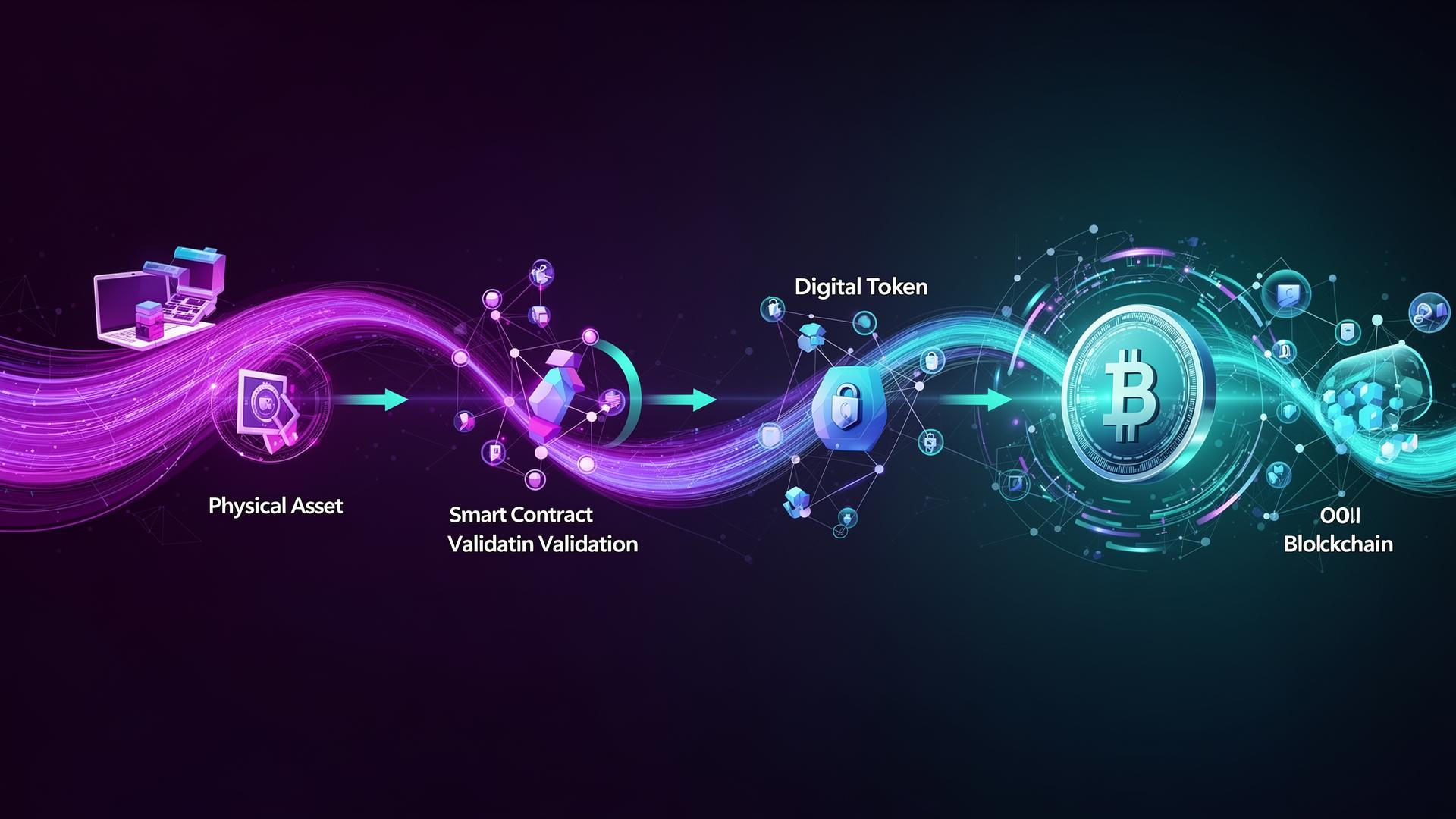
The RWA Tokenization Explosion
BlackRock's BUIDL fund crossed $500 million in assets within months of launch. Franklin Templeton's tokenized money market fund manages over $700 million on-chain. These aren't crypto experiments, they're signals that the world's largest asset managers see blockchain as infrastructure, not speculation.
Why 2026 Is the Inflection Point
Regulatory Clarity: The EU's MiCA framework takes full effect in 2025, providing legal certainty for tokenized securities. Singapore, Hong Kong, and Dubai have established clear regulatory pathways. The US remains the wildcard, but institutional pressure is mounting.
Infrastructure Maturation: Layer-2 solutions have dramatically reduced transaction costs. Cross-chain bridges are becoming more secure. Institutional-grade custody solutions now exist. The plumbing is finally ready for trillions in traditional assets.
Demand Drivers: Fractional ownership of real estate, private equity access for retail investors, 24/7 settlement, global liquidity pools, the use cases are compelling and immediate.
Market Size Projections
Boston Consulting Group estimates the tokenized asset market could reach $16 trillion by 2030. Conservative projections suggest: 2025: $50-100 billion tokenized RWA 2026: $200-500 billion tokenized RWA 2028: $2-5 trillion tokenized RWA
These figures exclude cryptocurrencies and stablecoins, they represent purely traditional assets moving on-chain.
Leading RWA Tokens to Watch
Ondo Finance (ONDO) Tokenized US Treasuries and money market funds. Partnered with BlackRock. Focused on institutional-grade products with regulatory compliance.
Maple Finance (MPL) Undercollateralized lending for institutions. Provides yield from real credit activities rather than DeFi circular lending.
Centrifuge (CFG) Real-world asset financing protocol. Brings trade receivables, invoices, and real estate loans on-chain.
Polymesh (POLYX) Purpose-built blockchain for security tokens with built-in compliance and identity verification.
RealT / Lofty Real estate tokenization platforms enabling fractional property ownership with rental income distribution.
The Altcoin Cycle: Historical Patterns
Bitcoin halving cycles have historically catalyzed altcoin seasons 12-24 months post-halving:
2013 Cycle: Bitcoin rallied first, altcoins followed 6-9 months later 2017 Cycle: ICO boom peaked 18 months after halving 2021 Cycle: DeFi summer + NFT explosion 12-18 months post-halving
2024-2026 Projection: If patterns hold, altcoins (particularly RWA-focused) could see major outperformance in late 2025 through mid-2026.
Layer-2 Infrastructure Maturation
The scalability trilemma is being solved through modular architectures:
Arbitrum: Dominant L2 by TVL, expanding into custom chains (Arbitrum Orbit) Base: Coinbase's L2 bringing mainstream users on-chain Optimism: OP Stack enabling interoperable L2 ecosystem zkSync Era: Zero-knowledge proofs for privacy-preserving transactions
RWA tokenization will predominantly occur on these L2s due to lower costs and faster finality.
Stablecoin Regulation Impact
Stablecoins are the gateway to RWA adoption. Regulatory frameworks will determine:
Reserve Requirements: Backing composition affects yield potential Geographic Access: Which stablecoins can operate where Banking Integration: Fiat on/off ramp availability Institutional Adoption: Compliance certifications required
Circle's USDC and Tether's USDT will compete with bank-issued stablecoins. PayPal's PYUSD represents traditional finance entering the arena.
AI + Crypto Convergence
Artificial intelligence and cryptocurrency are converging in unexpected ways:
Compute Markets: Decentralized GPU rental for AI training (Render, Akash) AI Agents: Autonomous agents with their own wallets and economic activity Data Marketplaces: Tokenized datasets for AI model training Prediction Markets: AI-enhanced forecasting with crypto incentive structures
This intersection could produce outsized returns but remains highly speculative.
Price Predictions for Major RWA Tokens
Note: These are analytical scenarios, not investment advice.
Bitcoin: $150K-$200K remains achievable in bull scenario Ethereum: $8K-$12K if institutional staking adoption accelerates Solana: $300-$500 if TPS advantages attract RWA applications
Risk Factors and Bear Scenarios
Macro Risks: Prolonged recession reducing risk appetite Interest rates remaining elevated Dollar strength suppressing crypto valuations
Regulatory Risks: US enforcement actions against RWA protocols KYC requirements making DeFi impractical Securities classifications limiting token utility
Technical Risks: Smart contract vulnerabilities in RWA protocols Oracle failures affecting real-world data feeds Bridge exploits undermining cross-chain confidence
Market Risks: Bitcoin correction triggering broader selloff Stablecoin de-peg event destroying confidence Whale manipulation in illiquid RWA tokens
Investment Thesis Summary
High Conviction Themes: RWA tokenization is inevitable, the question is timing, not if Infrastructure is ready, L2s and institutional custody enable adoption Institutional capital is entering, BlackRock, Fidelity, Franklin Templeton Regulation is clarifying, particularly outside the US
Portfolio Considerations: Core position: Bitcoin + Ethereum (store of value + programmability) Growth allocation: Leading RWA tokens (ONDO, MKR, MPL) Speculation: AI+crypto intersection, emerging L2s Avoid: Overconcentration in any single narrative
Timing Expectations: 2025 H1: Accumulation phase, potential volatility 2025 H2: Momentum building, narrative shift to RWA 2026 H1: Potential euphoria phase for winning narratives 2026 H2: Watch for cycle top signals, reduce risk
Conclusion
The 2024-2026 cycle will likely be remembered as the moment cryptocurrency evolved from speculative asset class to financial infrastructure. RWA tokenization represents the bridge between traditional finance's $500+ trillion asset base and blockchain's transparency, programmability, and accessibility.
Investors positioned at this intersection, with appropriate risk management, diversification, and realistic expectations, may capture generational returns. But the path will be volatile, and not every RWA project will succeed.
Focus on protocols with institutional partnerships, regulatory compliance, and actual transaction volume. The cream will rise, but only after the inevitable shakeout of speculative excess.